
Terales
Brand Identity
Product Design
Mobile App Design
Campaign Creative
Motion Identity
Sector
Capability
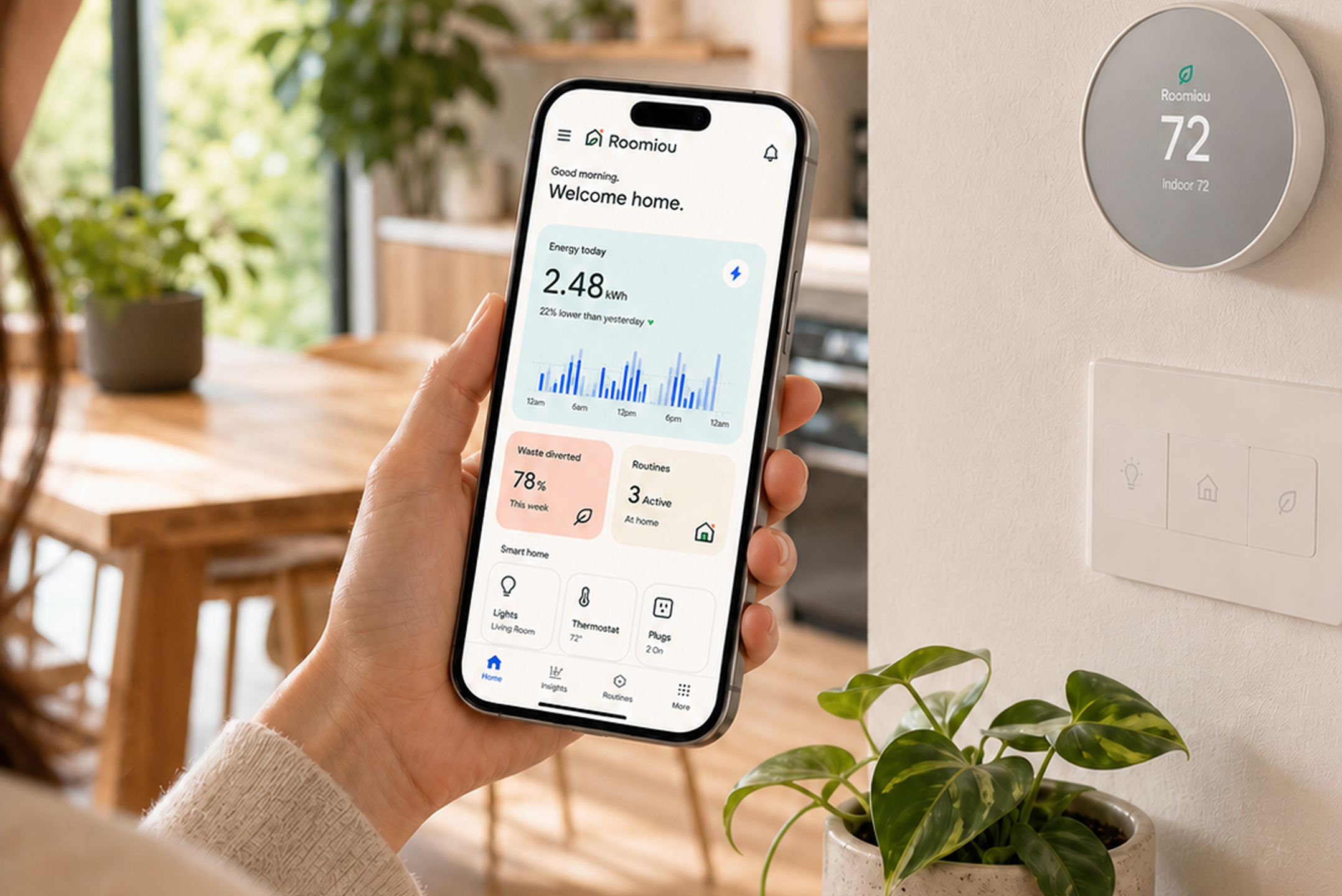
Terales was shaped as a smart home product experience for people who want connected living to feel simpler, more intuitive and easier to control. The work centred on creating an interface system that could bring multiple home functions into one clear digital environment. From smart home UX and interface design to control logic, interaction design and product experience, Terales was designed to make connected daily living feel more legible, responsive and calm.

“A smart home experience should not make the home feel more complicated. It should make control feel natural, visible and quietly responsive.”
Smart home products often promise convenience, but the experience can become fragmented: separate devices, unclear states, hidden controls and too many competing settings.
For Terales, the opportunity was to design a more coherent way to manage the home. The product needed to make connected systems feel understandable at a glance, while giving users enough depth when they need to adjust, automate or review specific settings.
The result is a smart home experience built around calm control. A product language where UX, interface and interaction patterns help people understand what is happening in their home and what they can do next.


Smart home UX for daily routines
The Terales UX was shaped around the way people use connected home systems throughout the day.
Users move between quick checks, direct controls, scheduled routines, room-level adjustments and more detailed settings. The experience needed to support each of these moments without making the product feel heavy or technical.
Key areas of focus included home overview, room navigation, device controls, routine setup, automation states, alerts, user preferences and confirmation moments. Each flow was designed to make connected living feel easier to manage and easier to return to.

Interface design for visible status
In smart home products, visibility is central to trust.
The Terales interface was designed to make home status clear: what is on, what is off, what is changing, what needs attention and what is operating automatically. Components, cards, toggles, sliders, room panels, alerts and system states were arranged around clear hierarchy and immediate interpretation.
The interface balances simplicity with control. It helps users act quickly while still making deeper settings available when needed.

Control system with calm precision
The control system was developed to make interaction feel direct, predictable and precise.
Rather than burying controls inside complex menus, Terales uses visible actions and contextual controls that relate to the user’s current environment. Lighting, climate, security, appliances and routines can each follow consistent interaction logic, helping the product feel easier to learn over time.
This creates a more dependable experience: one where users can understand cause, effect and system response with less uncertainty.
Clear
Responsive
Connected
Have a similar project in mind?
Start with a project enquiry so we can understand the business problem, scope, timeline and right route before recommending next steps.
Interaction design for connected behaviour
Terales’ interaction design was shaped around feedback.
Every control action needs to show response: a state change, confirmation, delay, error, automation trigger or successful completion. These signals help users trust the product and understand how their connected home is behaving.
Micro-interactions, transitions and feedback states were designed to feel calm and useful. The system responds without demanding attention, keeping the home experience composed rather than intrusive.
Product experience for the whole home
Terales needed to feel like one connected environment rather than a collection of disconnected device controls.
The product experience brings together rooms, devices, routines and alerts into a unified structure. It helps users move between everyday actions and more advanced settings with a consistent mental model, making the system easier to understand as it grows.
This gives Terales a digital foundation for connected daily living: practical, flexible and designed around the rhythms of the home.
Highlights
A smart home UX system shaped around daily routines, room-level control and connected living.
Interface design created to make device status, alerts, changes and controls easier to understand.
Control system developed for lighting, climate, security, appliances and routine behaviours.
Interaction design shaped around clear feedback, predictable states and calm response.
Product experience structured to connect rooms, devices, automations and preferences.
A unified digital foundation for smart home management across everyday moments.
Related work
Fleetyup
Fleetyup
Brand Strategy
Brand identity
Motion Identity
Roomiou
Roomiou


